

The hallway is silent except for the soft creak of the floorboards. The wallpaper, aged to a sepia tone, holds its breath as though it remembers. Somewhere far below, a piano plays a single hesitant note, too faint to be certain, too real to be ignored. At the Stanley Hotel in Estes Park, Colorado, guests whisper that the music comes from a ballroom that has been empty for decades.
They still go, of course. They pay for the chance to stand where time feels thin.
For many travelers, places like this are more than curiosities. They are emotional landscapes, mirrors that reflect a fascination with mortality, memory, and meaning. The growing phenomenon known as dark tourism invites people to step into history’s shadows not out of morbidity, but out of longing. People go to haunted places not to be frightened, but to feel something real.
The Lure of the Haunted
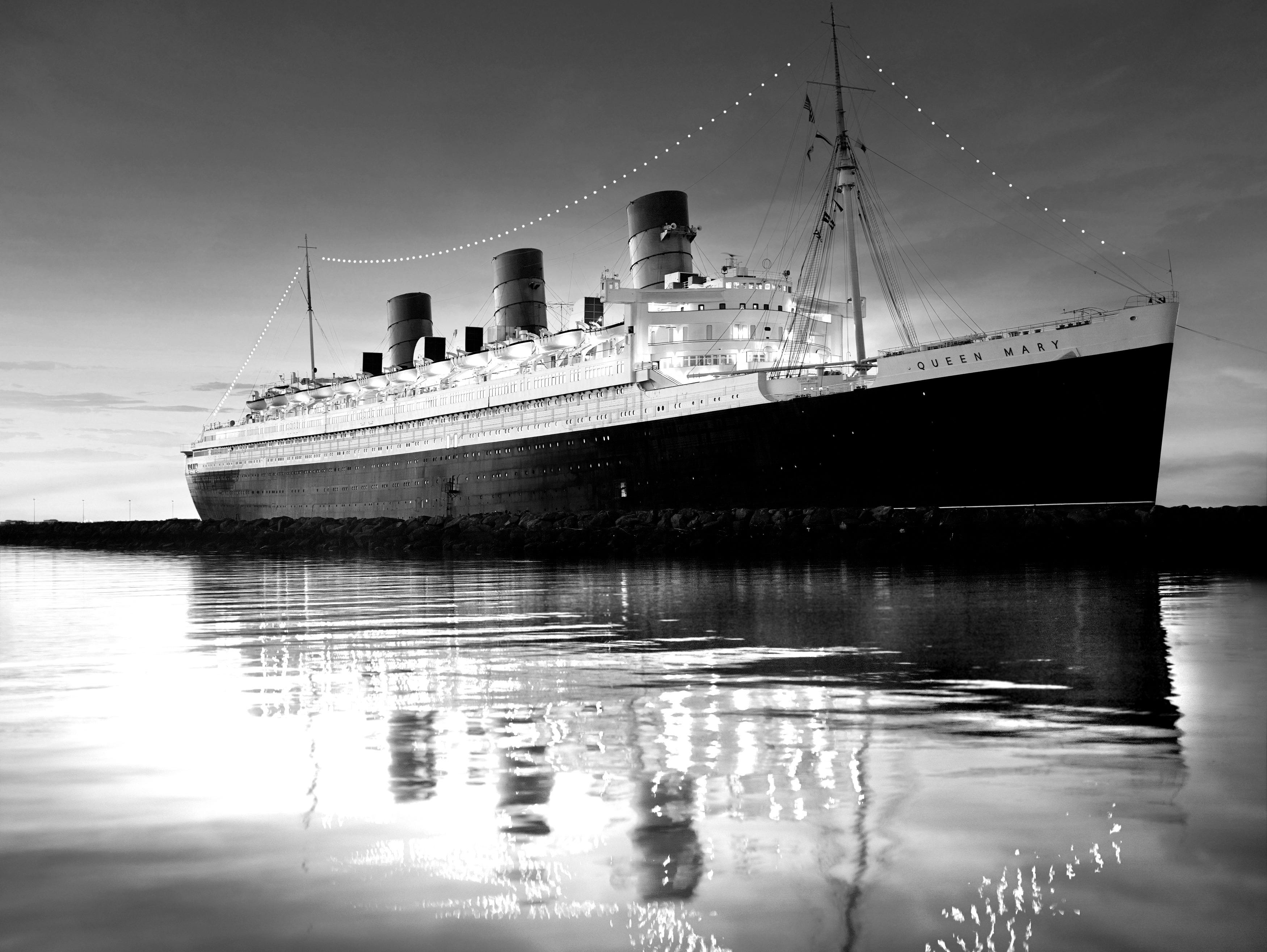
Haunted destinations are woven across the American map like forgotten verses in a national song. From the fog-draped corridors of the Queen Mary in Long Beach to the sun-faded battlegrounds of Gettysburg, each site hums with a mix of reverence and unease.
The scholarly term for this is dark tourism, coined in 1996 by researchers John Lennon and Malcolm Foley, who defined it as “the presentation and consumption of real and commodified death and disaster sites” (Foley & Lennon, 1996). A related term, thanatourism, was proposed the same year by tourism scholar A. V. Seaton, who defined it more narrowly as travel motivated by “the desire for actual or symbolic encounters with death, particularly, but not exclusively, violent death” (Seaton, 1996). Seaton’s term never caught on as widely; three decades of research has settled on “dark tourism” as the field’s working name, even though, in practice, dark tourism is rarely about death itself. It is about what survives it.
The Common Misunderstanding
The instinctive assumption is that dark tourism is thrill-seeking dressed up in history, a socially acceptable way to indulge morbid curiosity. Recent academic research complicates that picture considerably. A 2024 study applying attachment theory to domestic dark tourism found that visitors’ connection to tragic sites is driven less by fascination with the tragedy itself and more by identity, national memory, and a sense of belonging to something larger than an individual life (Aggarwal, 2024). Researchers studying the field broadly have applied terror management theory and self-categorization theory to the same pattern: confronting mortality at a remove, in a controlled and socially sanctioned setting, appears to reinforce meaning and identity rather than simply deliver a scare (state of dark tourism research literature, 2025).
This reframes the entire category. A well-run ghost tour and a battlefield memorial are not opposite ends of a respectability spectrum, one crass and one solemn. Both are answering the same underlying visitor need: learning, emotional processing, and a felt connection to people and events that came before. What varies is execution, not motive.
The Economy of the Unseen
What began as folklore has evolved into a measurable industry. America Haunts, an association of major haunted attractions, estimates the U.S. haunted attractions industry generates between $300 million and $500 million annually, spread across roughly 2,100 for-profit haunted attractions nationwide, roughly double the number operating in the 1990s. In towns where the supernatural has become part of civic identity, the effect on local economies is substantial: ghost tours and paranormal-themed events reportedly contribute up to 20 percent of local tourism revenue in Salem, Massachusetts, a town that has built an entire seasonal economy around its history.
That is a specific, well-documented niche within a much larger category. Broader market-research estimates place the full “dark tourism” market, encompassing haunted hotels, battlefield tourism, disaster-site visits, and heritage tourism tied to tragedy, in the tens of billions of dollars globally, with continued growth projected through the next decade. Those broader figures come from commercial market-research firms rather than peer-reviewed economics, and should be read as directional rather than precise.
Tour guides in this economy function as modern narrators, blending history and story into experiences that shape how visitors process the past. When done with care, that storytelling preserves heritage and fosters genuine connection. When reduced to pure spectacle, it risks trivializing the suffering that gives a site its meaning in the first place. The difference between the two is not a matter of subject, a ghost tour and a battlefield tour can each fail or succeed at this, but of whether the storytelling treats the history as something to honor or something to sell.
What the Research Actually Supports
A 2026 study in Humanities and Social Sciences Communications examined memorable tourism experiences at a dark tourism site in South Korea and found that mindfulness, sustained, non-judgmental attention to the present moment, was strongly associated with how memorable and meaningful visitors found the experience, alongside more expected factors like knowledge, involvement, and connection to local culture. In other words, the visitors who engaged most deliberately, rather than passively consuming a scare, reported the most lasting and meaningful experiences.
This aligns with what psychologists call exposure with meaning: revisiting a distressing place or story deliberately, in order to integrate the emotions attached to it rather than avoid them. Veterans visiting battlefields, families returning to ancestral sites, and descendants tracing historical routes of hardship all participate in versions of this process. It is a different psychological mechanism than fear-seeking, and it is closer to what pilgrimage has always offered: a structured, intentional confrontation with loss that produces integration rather than avoidance.
What research in this area cannot yet fully establish is how much of the reported “feeling of presence” at haunted sites reflects genuine psychological or physiological response to place, versus expectation effects created by knowing a site’s reputation in advance. Both are plausible contributors, and disentangling them requires more controlled study than the tourism-experience literature has produced so far.
The Larger Pattern
Many cultures have long treated sites of tragedy as sacred rather than sinister. In Japan, shrines mark places of tragedy to honor spirits and teach respect. In Mexico, Día de los Muertos transforms cemeteries into vibrant spaces of communion rather than avoidance. America’s version of this impulse is more commercialized and more fragmented, split between solemn battlefield memorials and Halloween-season ghost walks, but the underlying human need is the same: a structured way to stand near mortality without being consumed by it.
The best dark tourism experiences, whether a candlelit walk through a historic cemetery or a quiet afternoon at Gettysburg, do not seek to terrify. They seek to illuminate. Fear, in this setting, functions as a bridge rather than a barrier, a reminder of fragility that also sharpens appreciation for what persists. Standing in a haunted hallway or on a solemn field, most visitors are not looking for a ghost. They are acknowledging something in themselves: memory, mortality, and the strange comfort of continuity.
W3 Evidence Index™
W3 Evidence Index™ Score: 6.2/10
Confidence Level: Moderate Confidence
Full category breakdown, assessment, and limits available below for paid subscribers.
