

Machines have gotten faster, sharper, and eerily articulate. What they still cannot do is read the room. That gap is becoming the most valuable skill in the modern workplace.
Somewhere between automation and acceleration, we forgot the one thing machines still cannot replicate: the complexity of being human.
As AI systems grow sharper, faster, and eerily articulate, the professional world has begun treating emotional intelligence as a soft luxury, something nice to have but not essential. As we move deeper into a reality where machines handle tasks once reserved for experts, a different truth is emerging: emotional intelligence is not the soft skill of the future. It is fast becoming a competitive necessity of the present.
The Age of Emotional Blindness
Spend a week scrolling through professional networks and you will see it everywhere: the obsession with optimization. Productivity hacks, automation tutorials, time management tools, every post promising a way to work smarter and faster. Buried beneath this constant improvement cycle is a quieter exhaustion.
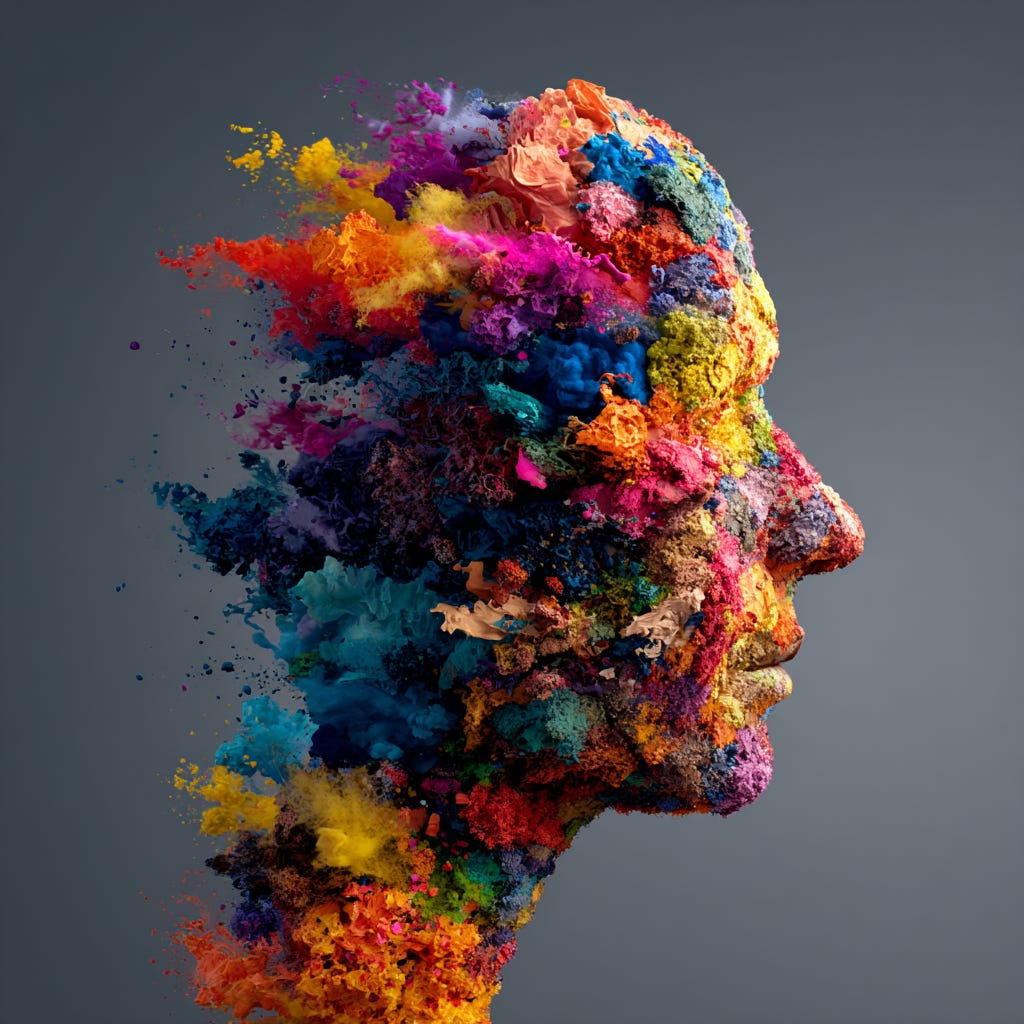
The more we optimize, the less we seem to connect. Meetings feel transactional. Emails sound like templates. Even leadership has taken on a mechanical rhythm in places, where efficiency outruns empathy.
AI did not create this dynamic, but it is magnifying it. Algorithms reward consistency, not nuance. They do not pause to register tone, and they do not distinguish between someone’s silence meaning focus and someone’s silence meaning fear. As workplaces adopt these systems at scale, there is a real risk that something more consequential than automation follows: a slow erosion of the human judgment that makes teams actually function.
That is where the human algorithm comes in, the case that the specifically human skill of reading and regulating emotion is becoming more valuable, not less, precisely because it is the one capability AI cannot absorb.
The New Intelligence Hierarchy
Through most of the last century, intelligence was measured largely by IQ, how quickly someone processed logic, patterns, and numbers. The digital age elevated a different metric: technical fluency. In an era where machines now outperform people on both fronts, what remains distinctly human is emotional intelligence, the capacity to perceive, interpret, and regulate emotion in ourselves and in others.
Daniel Goleman, the psychologist who popularized the term for a business audience, made the underlying argument directly in his 1998 Harvard Business Review article: “IQ and technical skills are important, but emotional intelligence is the sine qua non of leadership” (Goleman, 1998). Writing based on research across nearly two hundred large global companies, Goleman found that the most effective leaders were consistently distinguished less by raw intellect than by self-awareness, self-regulation, motivation, empathy, and social skill.
As AI takes over more execution, what is left for humans to bring is exactly what cannot easily be codified: collaboration, creative judgment, moral reasoning, and resilience under pressure. Emotional intelligence is the bridge across that space, where logic ends and leadership actually begins.
The Human Factor in Leadership
Leaders once earned authority primarily through experience and expertise. Increasingly, credibility is built through connection.
In high-stakes environments, from boardrooms to security operations centers, the ability to read emotional cues often shapes outcomes as much as technical skill does. When anxiety spreads through a team after a layoff announcement, no algorithm restores morale. When an employee’s performance dips because of burnout, no productivity dashboard rebuilds trust.
The leaders who genuinely thrive in this environment tend to treat empathy less as a sentiment and more as a discipline, one that strengthens the foundation of communication itself and, in turn, the performance built on top of it. There is a mild irony in this: the more time we all spend interacting with machines, the more we seem to crave that specifically human calibration in the people leading us.
Relearning Connection
Emotional intelligence is not innate. It is trained, much like any technical skill, which is part of why it is worth taking seriously as a discipline rather than a personality trait some people simply have and others do not.
The problem is that many modern workplaces have quietly eroded the spaces where it used to get built: mentorship, unhurried reflection, unstructured dialogue. Recent research on human capabilities that complement AI, developed by MIT Sloan’s Roberto Rigobon and Isabella Loaiza, groups five specifically human capacities, empathy, presence, judgment, creativity, and hope, into a framework they call EPOCH, arguing these are the capabilities AI struggles most to replicate and the ones organizations should be actively cultivating rather than treating as incidental (Loaiza & Rigobon, 2026). It is worth being precise here: this is a framework and argument, not a controlled outcome study proving emotionally intelligent teams universally outperform others, and it should be read as a compelling thesis rather than settled fact.
The World Economic Forum’s Future of Jobs Report offers a related, more measurable data point. Among its ranked core skills for the current decade, empathy and active listening, along with leadership and social influence, sit within the top ten core skills employers say they need most, alongside analytical thinking and creative thinking (World Economic Forum, 2023). That is not the same as saying “emotional intelligence” appears as its own named, ranked category. It is a more precise and, if anything, more useful data point: the specific behavioral components of emotional intelligence are showing up directly in what employers say they are hiring and training for.
The irony of this era is that the more artificial our intelligence becomes, the more intentional our humanity has to be. That is not a call to retreat from technology. It is a call to use it more deliberately. AI cannot feel empathy, but it can free up the time needed to practice it. It cannot replace trust, but it can hand back the hours required to rebuild it.
The Evolution of Work
We once believed machines would simply replace people. What is actually happening is subtler: machines are absorbing the parts of work we were never especially suited for in the first place, repetition, rote calculation, mechanical consistency.
What remains is what makes people specifically valuable: intuition, ethics, imagination, and the capacity to genuinely connect with another person under pressure. The clearest emerging signal in labor market research is not that intelligence will be measured by processing speed, but that it will increasingly be measured by the quality of judgment and connection someone brings to a room a machine cannot fully read.
Conclusion
The future of work is not about replacing the human mind. It is about not losing track of the human capacities that were never going to be replaced in the first place. None of this argues against building or adopting better tools. It argues for treating emotional intelligence as infrastructure rather than decoration, something organizations deliberately train rather than assume will show up on its own. The professionals and leaders who take that seriously now will have a real head start on the ones who treat it as a soft skill until the moment they discover, expensively, that it was never soft at all.
W3 Evidence Index™
W3 Evidence Index™ Score: 5.8/10
Confidence Level: Moderate Confidence
Full category breakdown, assessment, and limits available below for paid subscribers.
The following is available to paid subscribers.
