

As the monsoon retreats and the air fills with the scent of marigold and cardamom, millions across the world prepare for one of humanity’s most radiant celebrations, Diwali, the Festival of Lights. Homes shimmer with rows of clay lamps, fireworks paint the night in gold, and laughter mingles with prayer. Beyond the celebration lies something deeper: a quiet reminder that darkness, however inevitable, never truly wins.
Diwali is not only an ancient festival. It is a philosophy. It embodies the human yearning to begin again, to cleanse, forgive, and hope. Whether observed as a Hindu, Jain, Sikh, or by anyone who simply seeks renewal, Diwali speaks to the part of us that needs light not just to see, but to believe.
The Many Stories of Light
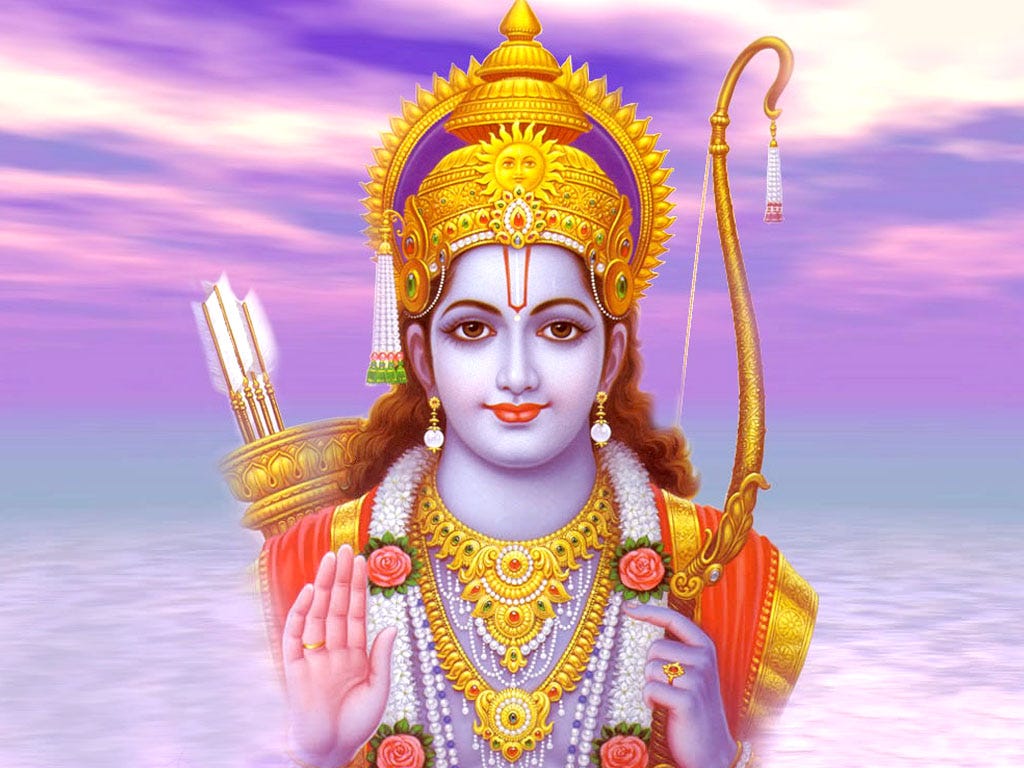
Across India and around the world, Diwali is celebrated for different reasons, each rooted in mythology and meaning. In northern India, it marks the return of Lord Rama to Ayodhya after fourteen years of exile and his victory over the demon king Ravana, a triumph of good over evil, truth over deceit. In Gujarat, the day honors Goddess Lakshmi, the deity of wealth and prosperity, who visits homes that are clean and filled with light. For Sikhs, Diwali coincides with Bandi Chhor Divas, commemorating the release of Guru Hargobind Ji from imperial captivity, a story of liberation and justice observed alongside, though distinct from, the Hindu festival.
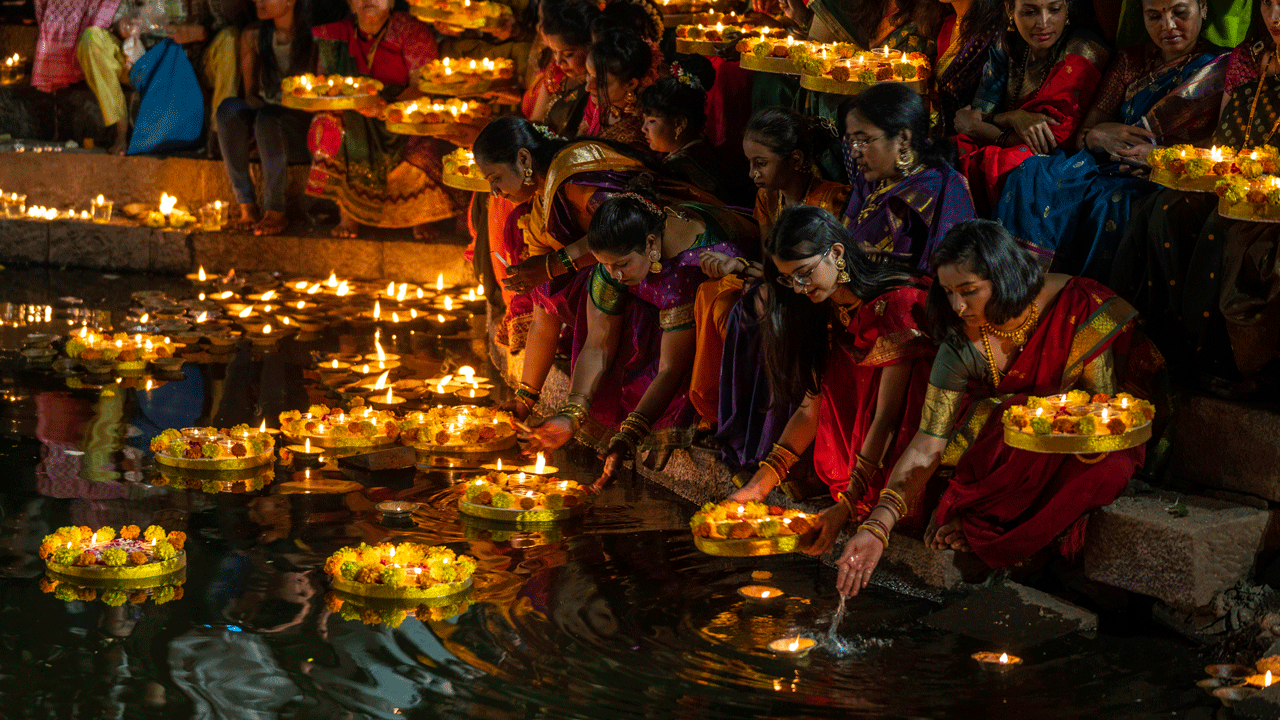
Though these stories differ, their essence overlaps: the renewal of the human spirit through awareness, compassion, and courage. The lights of Diwali, thousands of diyas glowing on doorsteps, are both literal and symbolic. They illuminate the streets and, the tradition holds, the inner corridors of the mind as well.
A Festival of Renewal
Diwali arrives at the end of the harvest season, when farmers settle accounts and prepare for new beginnings. In business, it signals the closing of financial ledgers and the start of a new fiscal year in parts of India. Gold markets surge, homes are renovated, and cities hum with energy as people prepare for prosperity.
But renewal in Diwali is not merely economic. It is moral and emotional, a reminder that abundance is traditionally understood to begin with integrity and gratitude. Cleaning the home, a ritual central to the festival, carries spiritual meaning: to sweep the floor, wash the walls, and decorate the entrance with rangoli patterns is an act of purification, symbolic of releasing what no longer serves and making space for what does.
The Meaning of the Light Itself
In Hindu philosophy, the diya’s flame is described as more than illumination. It is often called atma-jyoti, the light of the soul or inner consciousness, drawing on a much older tradition in which lighting a lamp represents the dispelling of ignorance rather than simply darkness. The Upanishadic prayer often recited around the festival, asato maa sad-gamaya, tamaso maa jyotir-gamaya, mrityor-maa amritam gamaya, translates roughly as a request to be led from untruth to truth, from darkness to light, from mortality to immortality. That framing has genuine philosophical depth independent of whether one holds the underlying religious beliefs: it treats light as an active practice of clarity rather than a passive absence of darkness.
There is a modern echo of this idea in psychology, though it is worth being precise about what the research actually shows. Studies on warm versus cool lighting and mood find real effects, but a more complicated picture than a simple “warm light equals calm” claim; some research finds warm lighting lifts positive mood in certain settings while other studies find mixed or even opposite effects depending on gender and context (Journal research on lighting temperature and mood, 2021-2024). The metaphor of light as clarity and safety is a much older and more universal idea than any single study, and it likely resonates because of that broader symbolic weight rather than because warm lamplight has a single, uniform physiological effect on anxiety.
The Sound of Joy and the Quiet of Reflection
While fireworks and sweets often dominate the imagery of Diwali, the festival also holds moments of introspection. Families gather to pray, to give thanks, and to forgive. The night sky becomes both spectacle and mirror, reflecting a full range of human emotion, exuberant, tender, contemplative.
This duality, outer celebration and inner stillness, is part of what gives Diwali its staying power. It models a kind of balance: joy without excess, reflection without despair. Even the exchange of sweets and gifts carries meaning beyond the transaction itself, functioning as an acknowledgment of shared humanity.
The Economics of Celebration
Diwali is also one of the more significant seasonal economic events in the world, and the current numbers are genuinely striking. According to the Confederation of All India Traders, India’s 2025 Diwali season drove retail sales to a record roughly 6 trillion rupees, about $68.77 billion, a 25 percent increase over the previous year, driven partly by recent reductions in goods and services tax rates on everyday items (Confederation of All India Traders, 2025). Consumer goods accounted for the largest share of that spending, followed closely by gold and jewelry, and the survey behind these figures found 87 percent of consumers specifically preferred Indian-made goods over imported alternatives that year.
The true significance of these figures is not simply their size. It is their inclusivity. Diwali spending sustains both luxury brands and local craftspeople simultaneously, handmade diyas, embroidered garments, and home-cooked sweets alongside large-scale retail and jewelry sales, which is a meaningfully different economic pattern than holidays dominated by a narrower set of large retailers.
Diwali in the Modern World
As Diwali spreads beyond its traditional borders, it is celebrated in cities from London to Los Angeles, from Singapore to Sydney. Corporate offices host pujas, schools teach students to make rangoli, and landmarks in multiple countries illuminate in gold and saffron during the festival period.
In this global context, Diwali functions as more than a religious festival. Its recurring message, that light overcomes darkness, kindness overcomes cruelty, and knowledge dispels ignorance, is not unique to Diwali. Every major light-centered holiday, Christmas candles, Hanukkah lamps, Eid lanterns, Kwanzaa flames, carries some version of the same idea in a different cultural language: that continuity depends on something more durable than certainty.
Conclusion
Diwali’s most enduring quality is not the visible celebration but what it asks of a person internally: to notice the parts of the self that feel dim, and to bring them deliberately into light rather than simply ignoring them. The record spending, the fireworks, and the sweets are the visible half of the festival. The quieter half, the decision to forgive, to begin again, to sweep out what no longer serves, is the half that does not show up in a retail report and arguably matters more. In a period defined by real economic and social uncertainty, that is not a small thing to offer.
W3 Evidence Index™
W3 Evidence Index™ Score: 5.6/10
Confidence Level: Moderate Confidence
Full category breakdown, assessment, and limits available below for paid subscribers.
