

For years, Americans were told the nation’s greatest threats were external. Terrorism. Foreign adversaries. Border crises. Cyber warfare. Political extremism. Every election cycle introduced a new existential emergency competing for public attention.
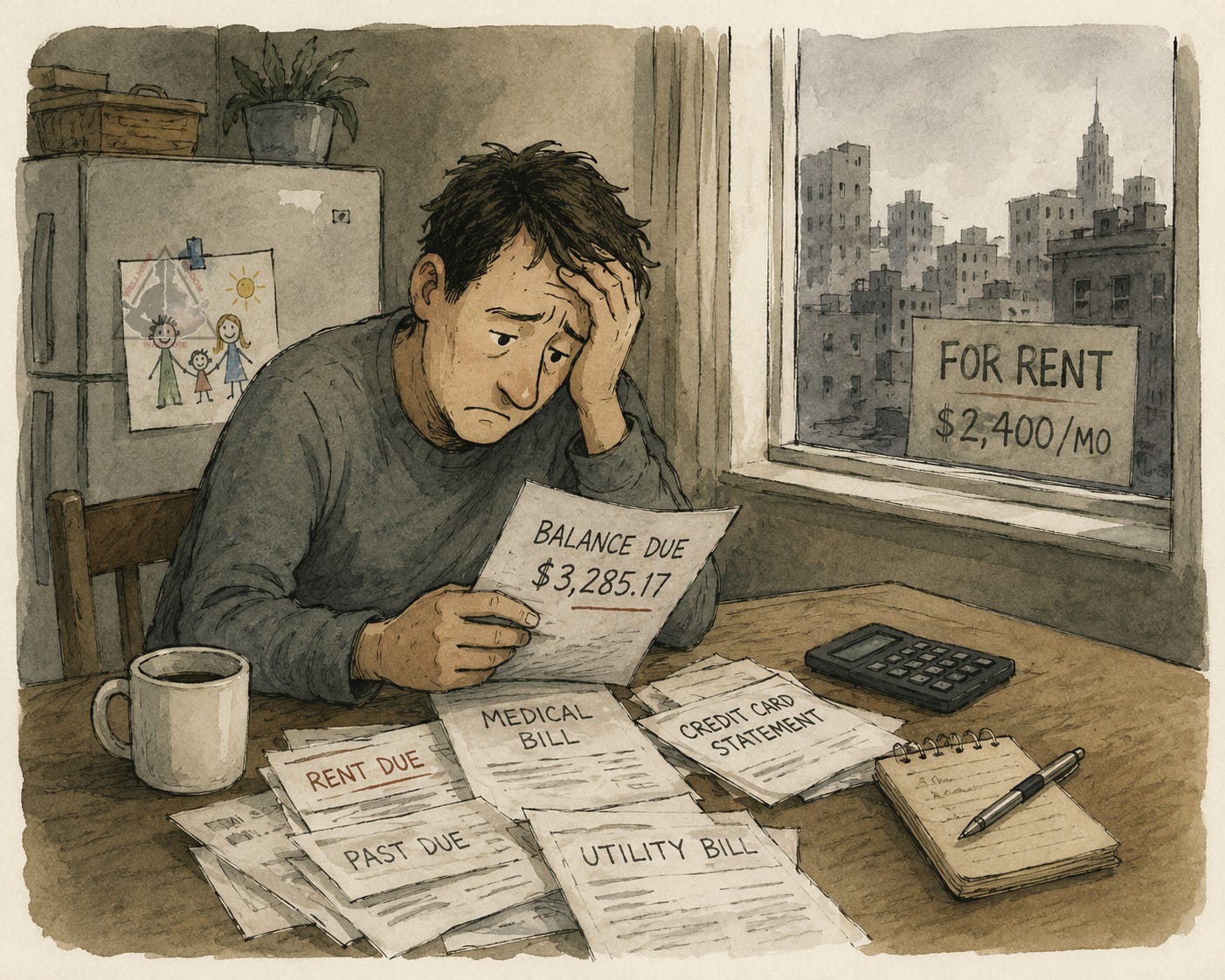
Beneath that outrage economy, a quieter and more dangerous reality has been taking shape. Americans increasingly believe the country itself is becoming economically unlivable.
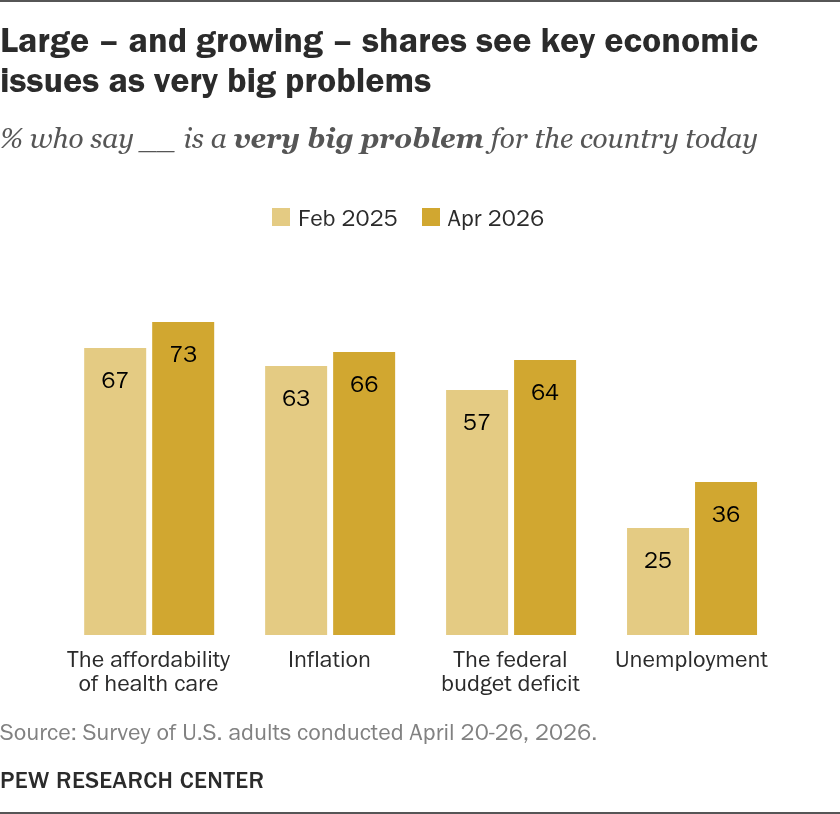
A new Pew Research Center survey, released in May 2026, captures a population less consumed by fears of invasion than by the pressure of everyday survival. Health care costs, inflation, government debt, and political dysfunction now dominate what Americans consider the nation’s biggest problems, and the numbers have moved sharply in a single year.
The Numbers Behind the Mood
Pew surveyed 5,103 U.S. adults from April 20 to 26, 2026. The findings are striking. Seventy three percent of adults now call the affordability of health care a very big problem, up six points from February 2025. Sixty six percent say the same of inflation. Concern over the federal budget deficit has climbed to 64 percent, a seven point jump in one year and the highest level Democrats have expressed on that question since Pew began asking it in 2018.
Then there is the figure that says more about the national mood than any economic indicator could. Seventy four percent of Americans, across both parties, now say the role of money in politics is one of the country’s most serious problems.
That is not a partisan complaint. It is a bipartisan verdict.
At the same time, something is being deprioritized. Concern over illegal immigration has fallen from 48 percent in February 2025 to 38 percent today, driven by declines among both Republicans and Democrats. That does not mean Americans believe immigration has been resolved. It means something else has overtaken it in urgency, and the data points squarely at the cost of living.
This is where the story becomes less about any single issue and more about what happens when a population stops believing the system is built to help it.
The full analysis, including what the Federal Reserve and independent trust research reveal about how deep this erosion runs, continues below for W3 subscribers.
W3 Evidence Index™: Free Preview
Claim assessed: Pew Research Center’s May 2026 survey findings on Americans’ perceptions of health care affordability, inflation, the federal deficit, money in politics, and illegal immigration as national problems.
Criterion Weight Score (/10) Methodological Quality 0.25 8.0 Data Quality 0.20 8.5 Transparency 0.15 9.0 Corroboration 0.15 7.0 Bias Risk 0.10 8.5 Statistical and Analytical Rigor 0.10 8.0 Source Authority 0.05 9.0
W3 Evidence Index™ Score: 8.2/10
Confidence Level: Very High Confidence
Assessment: The survey draws on Pew’s American Trends Panel, a probability based national sample, with full methodology, questionnaire, and topline results published alongside the report. Pew is a nonpartisan, nonadvocacy research organization with a long track record on this exact question series, dating to 2018, which allows genuine trend comparison rather than a single snapshot.
Limits: The data measures perception, not objective economic conditions. A rise in the share calling health care “a very big problem” reflects belief and sentiment, not a direct measurement of actual costs, debt levels, or policy failure. The survey cannot establish why concern shifted, only that it did. It is also limited to a single country and a single research house, so the specific percentages have not yet been cross replicated by an independent pollster using identical question wording.
Bottom Line: Readers can trust these figures as an accurate, well documented snapshot of what Americans currently believe about the state of the nation. They should not be read as an independent audit of the economy itself.
