
The Unconscious Crowd and the Illusion of Conviction
What Carl Jung understood about mobs eighty years ago, and why it still explains why disagreement now feels personal.

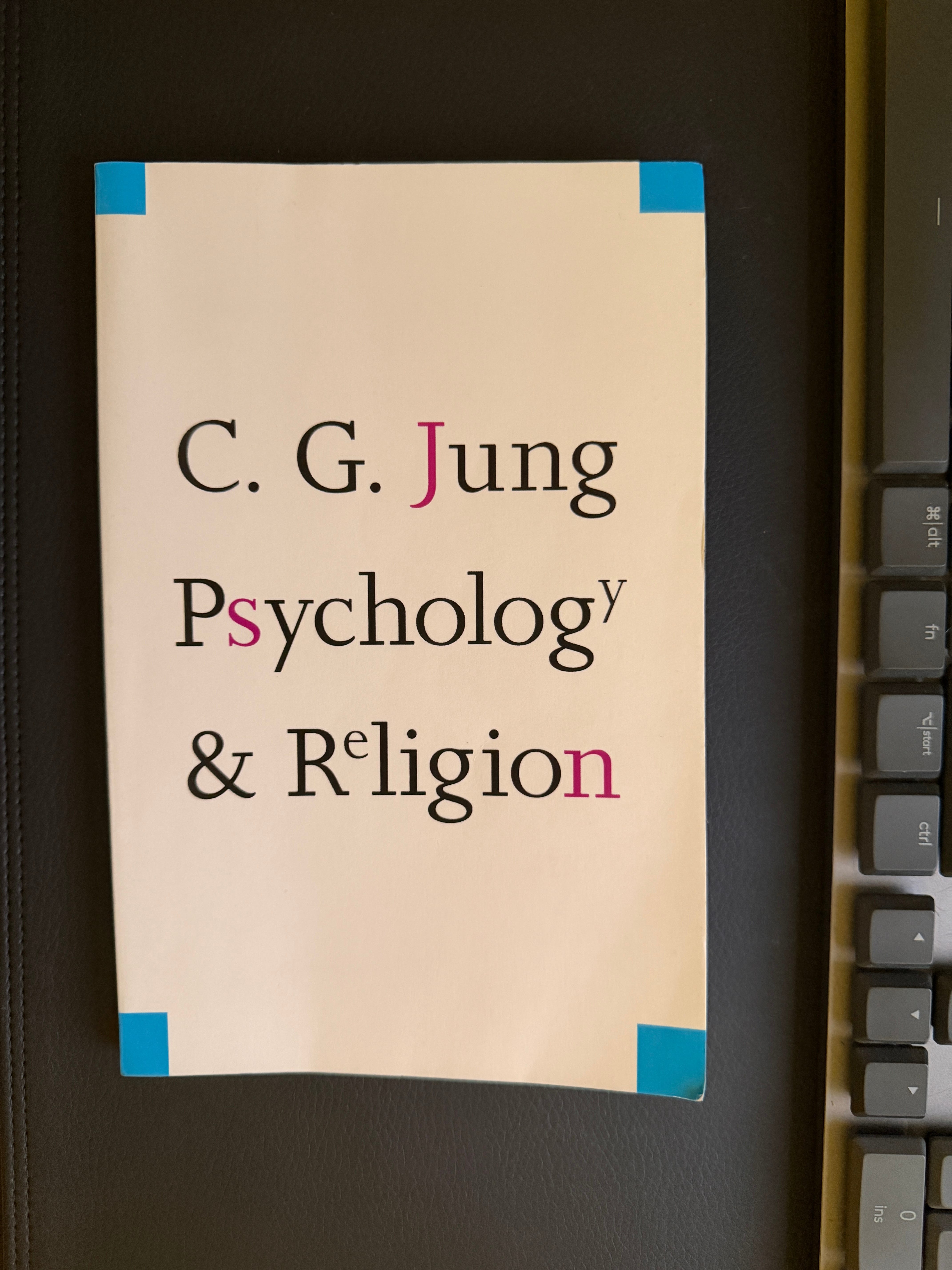
I have been spending my breaks lately reading Psychology and Religion, a series of lectures Carl Jung delivered at Yale in 1937. As I write this, I am only at the beginning, still working through the first essay on the unconscious mind, but even this early section has stayed with me longer than most things I read1.
Jung approaches the subject phenomenologically. He observes behavior, patterns, and experience rather than trying to reduce everything to something purely measurable. It is qualitative in nature, and while I have not yet reached the point where he introduces more empirical material, his observations are rooted in decades of clinical experience. That perspective matters, especially when discussing things that resist clean measurement.
The Beasts That Lie Dormant
One of the ideas Jung introduces early on is the existence of a darker side of consciousness, an underlying, animalistic part of the human psyche most of us would rather pretend does not exist. We are uncomfortable acknowledging it, so we suppress it. According to Jung, that suppression does not make it disappear. It waits for the right conditions to surface, and those conditions often appear in crowds.
“If people crowd together and form a mob,” Jung wrote, “then the dynamisms of the collective man are let loose, beasts or demons that lie dormant in every person until he is part of a mob” (Jung, 1938/1960).
What we now call mob mentality or groupthink feels like a modern label for something Jung was already describing nearly ninety years ago. When individuals become part of a group, something changes. Intellectual rigor declines. Moral restraint weakens. People say and do things they would never do alone. Jung describes the individual in a crowd who suddenly lashes out, damages property, or harms another person, behavior that looks irrational or even unrecognizable precisely because the individual is no longer acting as an individual.
This darkness is not limited to a few people. Jung is clear that it exists in everyone. The difference lies in how much resistance a person has to it, and how easily it takes hold when someone surrenders their individuality to the group. Some people resist. Others dissolve into it almost immediately.
Why Jung Places This Next to the Soul

What struck me most is where Jung places this discussion: immediately after talking about the soul. The soul, as Jung frames it, is not something science has historically been comfortable with. It cannot be seen, touched, or directly measured, and because of that, it has often been dismissed as metaphysical or irrelevant. Jung makes a case that elements associated with the mind and soul produce very real, physical effects regardless of how comfortable science is with the underlying concept.
He describes patients whose beliefs about their own health produced measurable physical symptoms with no organic cause behind them, cases where addressing the underlying psychological material, rather than the physical symptom itself, resolved the condition. The implication is difficult to ignore. If thoughts can make us sick or well, ideas are not imaginary. They are real in the sense that they shape behavior, physiology, and decision making. If consciousness and the soul are real because of the effects they produce, there is a dimension of human existence tied to the mind that cannot be dismissed simply because it resists direct measurement.
This is where the conversation becomes uncomfortable, because the same mechanism that allows the mind to heal also allows it to distort. The darker side of consciousness does not only manifest internally. It emerges collectively, when individuals stop thinking for themselves and start thinking as a group. This is where Jung’s work feels especially relevant today.
The Modern Mob
We are living in a moment defined by extremes. Political identity has hardened into something tribal. On one side, the MAGA movement has become shorthand not just for a political faction, but for an entire moral category. On the other, Democratic identity stretches from moderate liberalism to its own form of ideological extremism. Both sides are entrenched. Both feel as though they are holding the line against an existential threat that rarely exists outside rhetoric.

It is worth being honest about what current research actually shows here, since it complicates the picture in an interesting way rather than simply confirming it. Recent survey data finds that Americans self-identifying as politically moderate hit a record low of 34 percent in 2025, not a rising middle. At the same time, other research finds Americans show more actual policy overlap and agreement than they assume, meaning the polarization that is rising fastest is affective, how much people dislike the other side personally, rather than strictly ideological, how far apart their actual positions are (Pew Research Center; Gallup, 2025). In other words, the crowd Jung describes may be forming less around genuinely irreconcilable beliefs and more around identity and dislike itself, which is, if anything, a more unsettling version of his point rather than a less relevant one.
And yet, the loudest voices still belong to the crowd. Many people feel compelled to have opinions on everything, even when they lack the information or context to form one responsibly. Others rely almost entirely on personal experience or the experiences of those close to them, and that reliance creates confirmation bias: an isolated incident becomes evidence of a national trend, a single story becomes proof of systemic failure.
Social media accelerates this. Echo chambers form organically through social circles, then solidify through algorithms. Over time, a person no longer encounters ideas as ideas. They encounter them as group positions. Agreement becomes loyalty. Disagreement becomes betrayal.
The Question That Threatens Identity
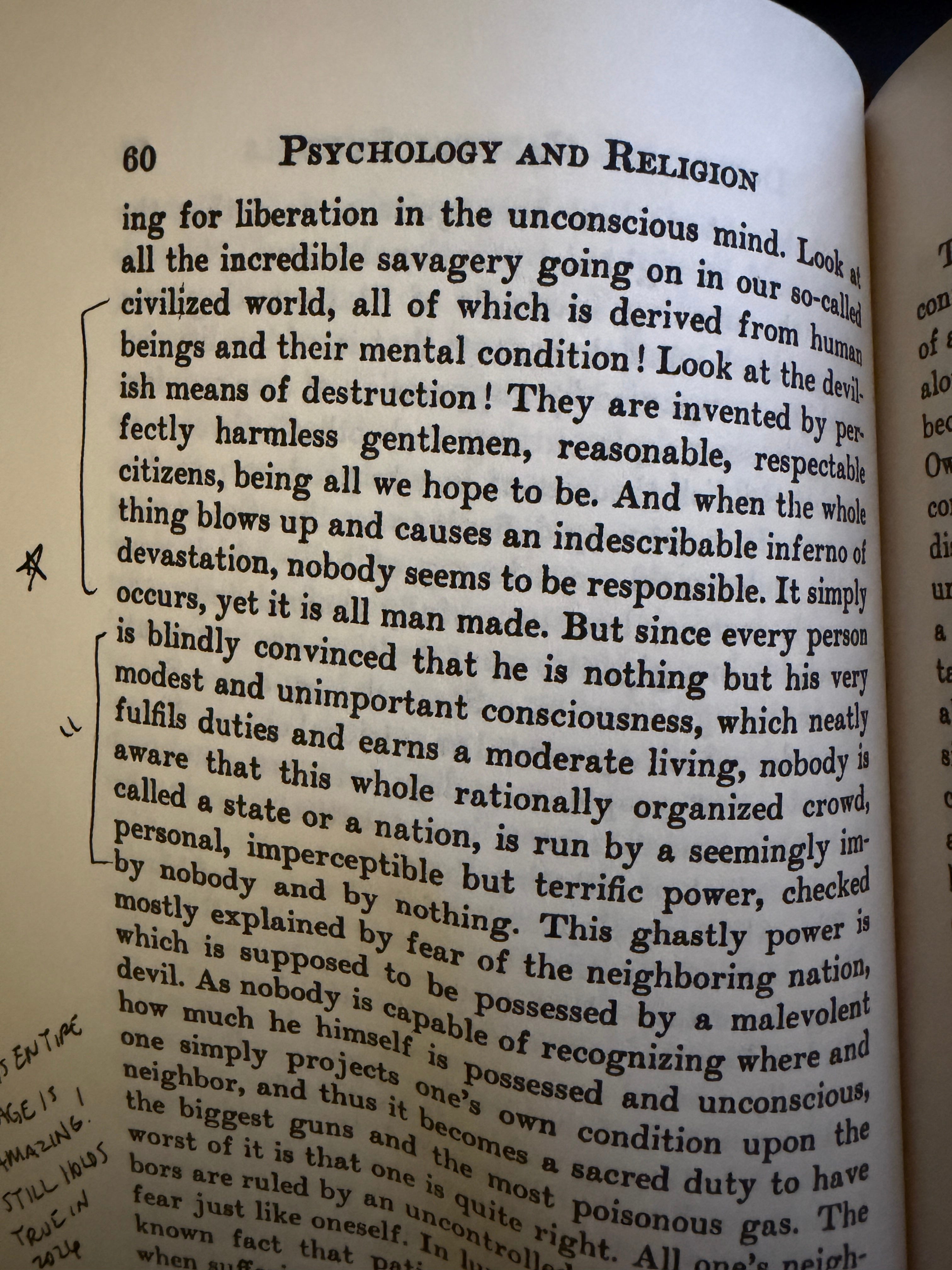
This is precisely the condition Jung warned about. When people feel protected by the group, they defend ideas they would never defend alone. They justify behavior they would otherwise reject. The question that rarely gets asked is the most important one: would I still believe this if these people were not around me?
That question is uncomfortable because it threatens identity. Many of us were taught that we are not defined by our friends, yet over time we begin to resemble the beliefs of those we surround ourselves with, not through malice or manipulation, but through proximity and repetition. When dissent disappears from our environment, so does critical thought.
The signs are familiar: an inability to acknowledge any merit in opposing views, reflexive rejection of ideas based solely on their source, moral certainty without reflection. These are not uniquely political traits. They are cult behaviors. We recognize them instantly in documentaries and struggle to see them in ourselves.
None of this means every issue requires neutrality or indecision. Some things deserve conviction. But conviction without independent thought is not conviction. It is imitation. It is also worth saying plainly that not every issue requires an opinion. There are many topics I do not have strong views on, not because they are unimportant, but because I do not know enough to speak about them responsibly. That is not apathy. It is intellectual restraint, and it has become increasingly rare.
Conclusion
Jung’s observation matters because it reminds us that the greatest threat to thinking is not ignorance. It is the comfort of belonging. When we trade reflection for identity, we let the unconscious take the wheel. The harder path is quieter. It involves pausing, questioning, sitting with uncertainty, asking whether our beliefs are truly ours or simply borrowed from the crowd. The real divide is not red or blue. It is between those who think for themselves and those who let the group decide for them, and none of us are fully immune to it.
W3 Evidence Index™
W3 Evidence Index™ Score: 5.8/10
Confidence Level: Moderate Confidence
This is a personal, reflective essay grounded in the author’s reading of a specific historical text (Jung’s 1937 Terry Lectures) rather than an empirical study. The central Jung quotation has been verified against the original lecture text. One claim in the original draft, that online discourse is developing a more neutral center, does not hold up against current 2025 survey data, which instead shows record-low moderate self-identification alongside a meaningful gap between low ideological polarization and high affective polarization; this has been corrected in the piece rather than repeated. Readers should treat the essay’s broader argument as reasoned personal reflection rather than a claim resting on quantitative proof.
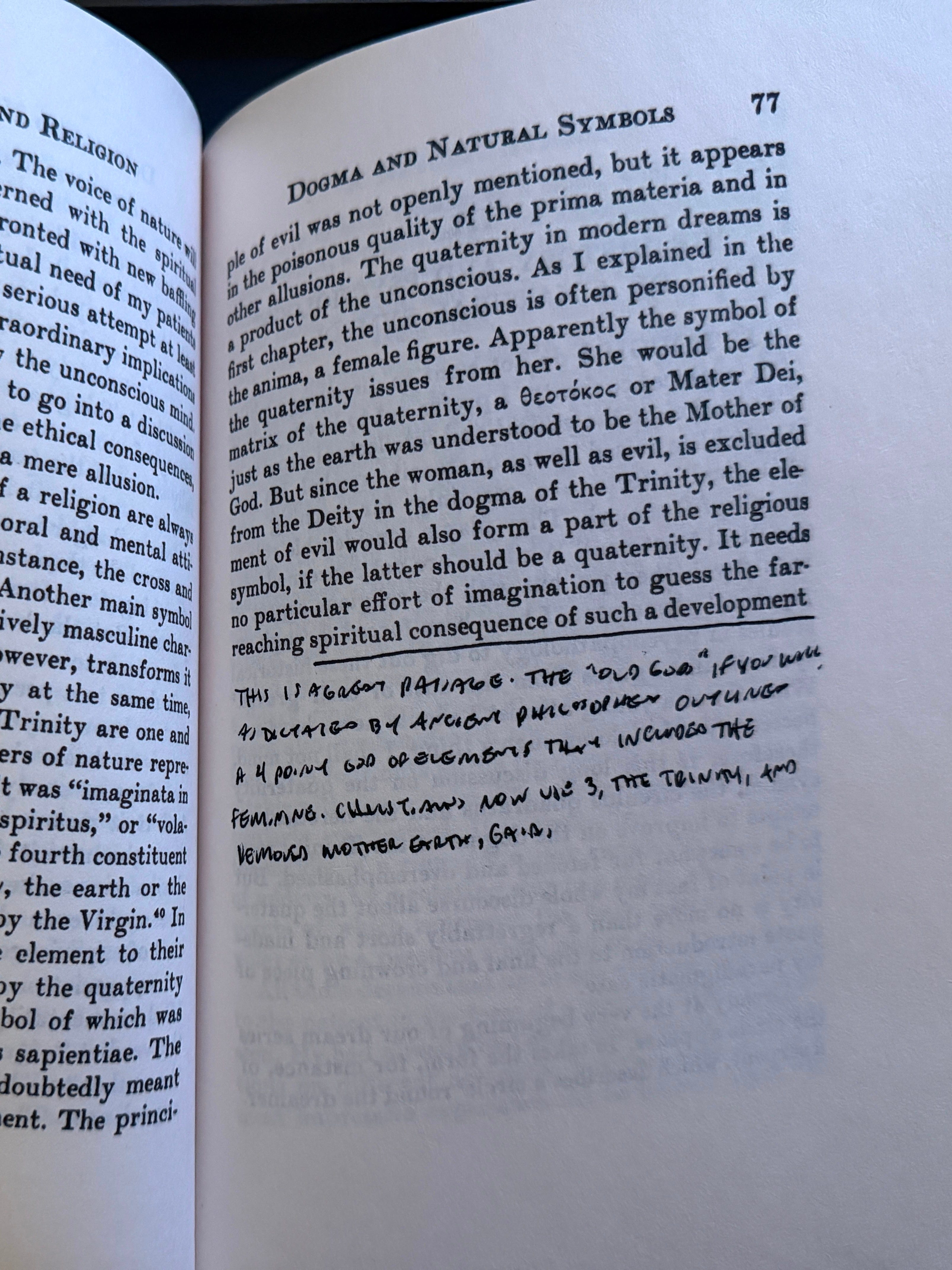
At the time of publishing; I have finished the book =)