

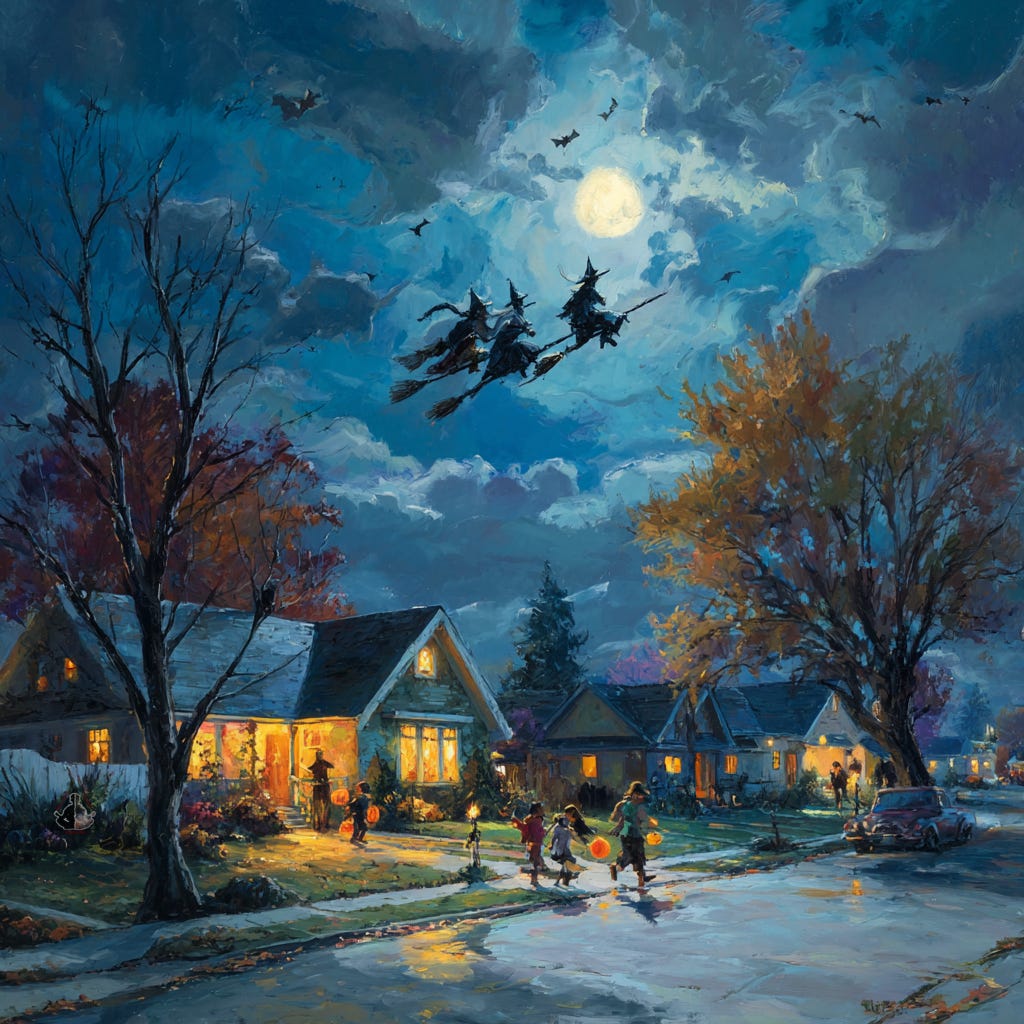
Each October, the world seems to change its colors. Streets flicker with orange light, front yards bloom with plastic gravestones, and stores overflow with skeletons and candlelight. But this fascination with the eerie goes far beyond seasonal decor. It is a cultural language, one that speaks to history, creativity, and the enduring human fascination with the unknown.
The modern draw toward haunted hotels, ghost tours, and dark aesthetics is not just nostalgia or entertainment. It taps into something researchers now study directly: how people voluntarily seek out fear, and what they get from it.
The Art of the Unsettling
From the haunting beauty of Victorian mourning attire to the minimalist spookiness of a black cat on a windowsill, the eerie has always carried its own aesthetic weight. The Gothic movement, with its stained glass shadows and poetic decay, gave rise to a visual language that prized emotion over reason and mystery over logic.
Today, that same sensibility thrives in fashion and interior design. The color palettes shift, but the principle remains: darkness reveals contrast. Without shadow, there is no light.
The trend known as dark academia romanticizes candlelit study halls, old architecture, and melancholic introspection. It echoes something older cultures often understood instinctively: that beauty frequently sits alongside impermanence.
Ghost Tours and the Performance of Fear
Across the United States, historic cities like Savannah, New Orleans, and St. Augustine transform each autumn into stages for the supernatural. Guides carry lanterns through cobblestone alleys, recounting tales of restless spirits and tragic love. Visitors lean in close, half skeptical and half believing.
This is not just folklore performance. It is an active area of academic study sometimes called recreational fear. Sociologist Margee Kerr, who has spent years researching visitors at Pittsburgh’s ScareHouse, found that roughly half of haunted attraction visitors report feeling better afterward, particularly those who actively engaged with their fear rather than avoiding it (Kerr, 2015). A 2020 field study published in Psychological Science, in which researchers fitted 110 haunted-house visitors with heart rate monitors, found that enjoyment followed an inverted U shaped curve relative to fear: too little fear felt boring, too much felt genuinely distressing, but a middle zone of arousal produced the strongest reported enjoyment (Andersen et al., 2020). The chemistry behind that sweet spot, a mix of adrenaline, dopamine, and endorphins, is the same physiological cascade that helps the body respond to real threats, except the brain can tell the haunted house is not one.
These experiences are not really about ghosts. They are about a shared, structured brush with fear that people process together, which is part of why campfire ghost stories tend to bond groups rather than divide them.
The Black Cat Paradox
The superstition that black cats bring bad luck is one of the more persistent myths in Western folklore, and its history is genuinely contradictory. In ancient Egypt, cats broadly were revered and associated with protection and the goddess Bastet. In medieval Europe, black cats specifically became entangled with witchcraft accusations and superstition, a association that hardened during the witch trials of the 15th through 17th centuries. Today, they occupy a very different cultural position: icons of elegance and independence in modern design, symbols of intuition and quiet self-possession rather than misfortune.
The modern aesthetic revival of the black cat functions less like nostalgia and more like reclamation, folding an old superstition into a very different, more affectionate visual language.
Haunted by History
To be haunted, in the truest sense, is to be visited by the past. Few cultures are as openly haunted as ours in this sense: preserved battlefields, ghost tours, and stories that blur the line between fact and folklore are all forms of keeping the past present.
Scholars studying what is now an established academic field called dark tourism, sites associated with death, tragedy, or the macabre, including former prisons, disaster sites, and memorial museums, describe it as a way societies institutionalize an existing fascination with mortality rather than invent a new one (Stone, 2006; Sharpley, 2009). Places like Gettysburg, Alcatraz, and the Winchester Mystery House function less as novelty attractions and more as memorials, reminders that progress carries a cost and that forgetting a difficult history can be its own kind of danger.
The Allure of the Aesthetic
The spooky aesthetic endures because it allows self-expression within contrast. It gives permission to explore melancholy without despair, curiosity without real danger. For many people drawn to it, the appeal is not morbidity so much as authenticity.
People decorate with skulls, candles, and antique mirrors not because they celebrate death, but because these objects function as a version of memento mori, a genuinely old artistic and philosophical tradition using reminders of mortality to encourage living with more awareness and intention.
Interior designers and lifestyle creators increasingly carry this aesthetic beyond October, with velvet textures, muted lighting, and vintage objects appearing year round in homes built around calm rather than clutter. The effect, done well, is closer to tranquility than fear.
The Science of Superstition
Superstition carries an undeserved reputation as pure irrationality, but the psychology behind it is fairly well understood. Rituals and symbolic acts genuinely help regulate emotion and reduce felt uncertainty, which is part of why people reach for small rituals, lighting a candle, carrying a charm, before uncertain moments.
The same logic extends to seasonal rituals like carving pumpkins or visiting haunted attractions. They function as a kind of emotional calibration, letting people process fear in a shared, structured setting rather than alone. The recreational fear research described above supports the broader idea that moderate, voluntary fear in a safe context can be genuinely enjoyable and, for many people, even mood boosting rather than simply anxiety inducing.
That is the paradox at the center of Halloween: by playing with fear deliberately, people practice not being ruled by it.
The Creative Archetype of the Haunted
Artists have long drawn on the haunted to explore universal emotions. From Edgar Allan Poe’s poetry to Tim Burton’s films, the uncanny has served as a vehicle for longing, loss, curiosity, and wonder.
The haunted archetype is not always literally about ghosts. It can describe any person or place carrying the memory of what once was: a faded theater, an abandoned house, an old photograph. Each tells a story about impermanence and change, where meaning survives even as form does not.
Fashioning the Fearless
Every few years, fashion reintroduces Gothic influences: lace, velvet, corsetry, dramatic silhouettes. These cycles tend to emerge less from nostalgia and more from a kind of visual confidence. To wear black in a sea of color is to make a deliberate statement.
Designers working in this space are tapping into something real: the Gothic aesthetic has long signaled emotional depth and unapologetic self-expression rather than gloom for its own sake, drawing on the same visual heritage as the Victorian mourning attire and Gothic revival architecture referenced earlier.
The Human Need for the Unseen
Haunted places, black cats, and eerie stories endure in part because they acknowledge something modern life often sidelines: the parts of experience that resist tidy measurement, atmosphere, intuition, the sense of history in a room. Even people who do not believe in ghosts often describe feeling something specific in old buildings, something they cannot quite quantify but do not dismiss either.
The haunted aesthetic, read this way, is less about fear and more about remembrance. It suggests that life feels richer when a little mystery is allowed to sit alongside reason rather than be argued out of the room entirely.
The Season That Never Ends
Although October amplifies these symbols, the pull of the uncanny does not really fade the rest of the year. Every flickering candle, every old photograph, carries a trace of it.
Whether it is a ghost tour in Savannah, a candlelit room of vintage books, or a black cat stretched out in a patch of sun, the underlying draw tends not to be fear. It is fascination: finding beauty in the dark and meaning in the unresolved.
W3 Insight
The world will likely always be a little haunted, not by ghosts exactly, but by the stories people choose to keep telling. The research on recreational fear suggests something worth sitting with: a controlled brush with darkness, done deliberately and safely, is one of the more reliable ways people process what actually frightens them.
W3 Evidence Index™
W3 Evidence Index™ Score: 6.8/10
Confidence Level: High Confidence
Full category breakdown, assessment, and limits available below for paid subscribers.
