
America’s Largest Chemical Exposure Experiment
- The W3 Magazine

- 1 day ago
- 17 min read
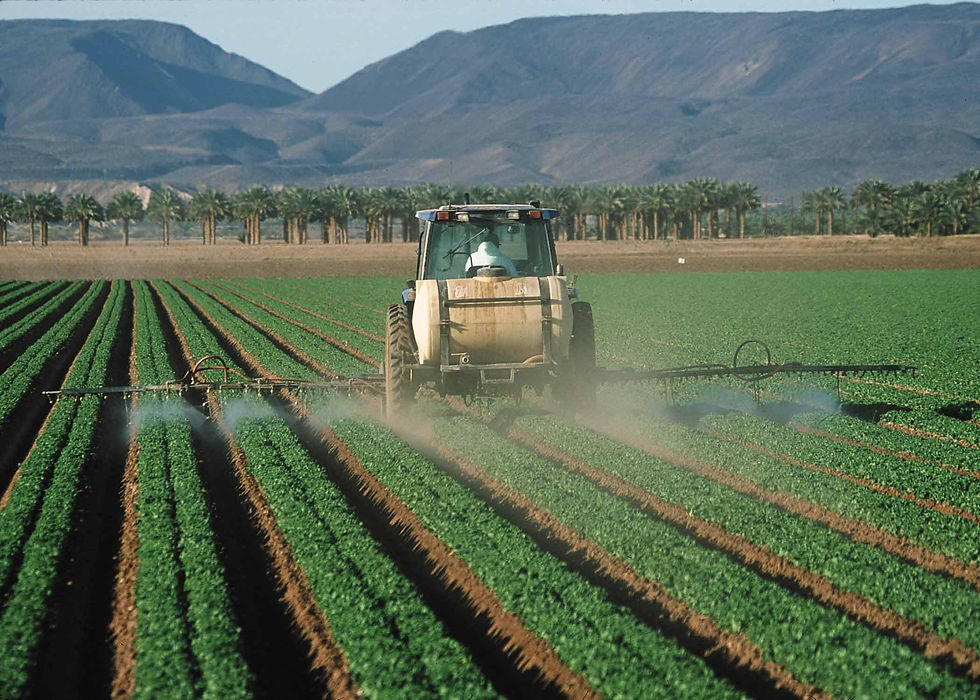
Glyphosate remains one of the most contested pesticides in the world because the regulatory record is not unified, the exposure footprint is broad, and the risk picture depends heavily on whether one is asking a hazard question or a real-world risk question. IARC, the cancer agency of WHO, classified glyphosate as “probably carcinogenic to humans” in 2015 on the basis of limited human evidence, sufficient animal evidence, and strong genotoxicity evidence. By contrast, the Joint FAO/WHO Meeting on Pesticide Residues, the U.S. EPA, EFSA, and ECHA have concluded that glyphosate does not currently warrant a carcinogenic classification or, in the dietary context, is unlikely to cause cancer at assessed exposure levels. That divergence is not semantic; it reflects different evidentiary rules, different treatment of industry studies, and different assumptions about exposure and formulation effects. [1]
For prolonged human use, the strongest concerns arise in occupational and high-cumulative-exposure settings, not in average dietary exposure. The largest U.S. prospective cohort of licensed applicators did not find an overall association with non-Hodgkin lymphoma or solid tumors, but it did report elevated acute myeloid leukemia estimates in the highest exposure groups, especially under longer lags. In contrast, Swedish case-control data reported higher odds of non-Hodgkin lymphoma among glyphosate-exposed participants, and a 2019 meta-analysis concluded that high cumulative exposure to glyphosate-based herbicides was associated with increased NHL risk, whereas later meta-analyses reached more skeptical conclusions and highlighted heterogeneity and publication bias. Small but increasingly important pregnancy and developmental studies have also reported associations with shortened gestation, reduced fetal growth, and adverse early neurodevelopment, although those findings are not yet definitive and require replication. [2]
Environmentally, the case for precaution is stronger than a simple “below benchmark” narrative suggests. U.S. Geological Survey monitoring found glyphosate and AMPA in most sampled U.S. streams and rivers and documented wastewater-related downstream detections. EPA has repeatedly identified ecological risk to non-target plants through spray drift, while amphibian and aquatic-organism studies show that formulations - especially those containing certain surfactants - can be substantially more toxic than technical glyphosate alone. Pollinator evidence is mixed but concerning: laboratory and semi-field studies report honey-bee gut microbiome disruption and greater pathogen susceptibility, while some newer studies report no clear bumblebee-level effects under particular test conditions. Soil-microbiome findings are also mixed: some field studies find little or no community-level effect, while others report altered bacterial or fungal assemblages, especially under repeated use, residue persistence, or particular climates. [3]
The evidence-based case for avoiding or minimizing glyphosate use is therefore not that average dietary exposures have already been shown to produce large, population-wide harm under current regulatory thresholds. Rather, the case is that prolonged use creates repeated, avoidable exposures and ecological burdens while leaving important scientific questions open: cancer disagreement remains unresolved; formulation toxicity and surfactants complicate active-ingredient-only risk assessments; vulnerable windows such as pregnancy and early development are not fully settled; and ecological externalities fall on non-target plants, aquatic organisms, and biodiversity. Where alternatives are viable - especially in household, municipal, school, park, and other low-necessity uses - substitution is strongly supported by current evidence and by existing policy practice in several jurisdictions. [4]
Regulatory Landscape and Recent Changes
The current regulatory picture can only be understood by separating hazard classification from risk assessment. IARC’s 2015 classification asked whether glyphosate is capable of causing cancer under some conditions and concluded that it is “probably carcinogenic to humans.” WHO’s JMPR, by contrast, asked whether glyphosate residues in food are likely to create carcinogenic risk at expected dietary exposures and concluded they are unlikely to do so, establishing an ADI of 0-1 mg/kg body weight and no need for an acute reference dose. EPA has maintained that glyphosate is “not likely to be carcinogenic to humans” and that labeled uses do not pose risks of concern to human health, but its 2020 Interim Decision was partly vacated by the Ninth Circuit and then fully withdrawn in 2022, leaving the registration review unfinished and under reconsideration. In the EU, ECHA has maintained that carcinogenic, mutagenic, and reproductive-toxicity classification is not justified, EFSA’s 2023 peer review identified no critical areas of concern but did identify data gaps and issues that could not be finalized, and the European Commission renewed approval until 15 December 2033 subject to conditions and restrictions. [5]
Several national governments have moved toward use restrictions even without full active-substance bans. Germany states explicitly that a national ban would conflict with EU law while the substance remains approved at EU level, but it also prohibits glyphosate use in private gardens, public areas such as parks and school grounds, and ecologically sensitive areas, and it bans or tightly restricts several agricultural uses, including late pre-harvest use in arable farming. France broadly bars private individuals from purchasing, using, or holding synthetic plant-protection products, with only low-risk and organic-authorized exceptions, and restricts pesticide use in public-access spaces. Mexico’s 13 February 2023 decree concerning glyphosate and genetically modified corn became the subject of WTO and USMCA disputes, illustrating that glyphosate policy can be driven by food-sovereignty and precautionary politics as well as toxicology. [6]

The timeline above summarizes the major inflection points in glyphosate regulation and reassessment. The important analytical point is that continued authorization is not equivalent to scientific closure. EPA’s U.S. review is still incomplete after judicial remand, while the EU in 2025 asked EFSA and ECHA to assess new carcinogenicity data from the Ramazzini Institute’s Global Glyphosate Study. [7]
Body or jurisdiction | Current or latest public position | Key caveat for prolonged use | Key source |
IARC | Glyphosate is probably carcinogenic to humans Group 2A. | Hazard classification; does not estimate population risk at actual exposure levels. | |
WHO JMPR | Dietary carcinogenic risk is unlikely at assessed exposures; ADI 0–1 mg/kg bw, ARfD unnecessary. | Focused on residues in food, not total environmental or occupational exposure, and not a full ecological assessment. | |
U.S. EPA | Labeled uses do not pose human-health risks of concern; glyphosate remains “not likely” carcinogenic in EPA’s underlying findings. | EPA’s 2020 Interim Decision was withdrawn after court action; registration review and ESA consultation remain ongoing. | |
ECHA | No carcinogenic, mutagenic, or reproductive-toxicity classification justified; serious eye damage and aquatic toxicity classifications retained. | Hazard classification only; does not replace full risk assessment. | |
EFSA | No critical areas of concern in 2023 peer review. | Data gaps remained; one impurity and some consumer dietary issues could not be finalized; long-term risk to mammals identified in 12 of 23 proposed uses. | |
European Commission | Approval renewed until 15 December 2033, with conditions and restrictions. | EU authorization still allows Member States to impose stricter national conditions; desiccation uses to control harvest timing are not permitted. | |
Germany | No national ban while EU approval stands, but glyphosate is prohibited in private gardens, many public spaces, and sensitive areas; several agricultural uses are also restricted. | Strongly precautionary use restrictions without active-substance prohibition. | |
France | Private individuals may not buy, use, or hold conventional synthetic phytopharmaceutical products; public-space use is restricted. | Restriction applies broadly to synthetic plant-protection products, not glyphosate alone. | |
Mexico | 2023 decree sought major limits and phase-out actions concerning glyphosate and became the object of international trade litigation. | Not a clean, universal ban; policy implementation has been contested and sector-specific. |
Human Toxicology and Epidemiology
Acute glyphosate toxicity is usually characterized by irritation and poisoning risk after concentrated exposure, especially swallowing large amounts or allowing spray/contact to remain on the skin or in the eyes. ATSDR states that large ingestion can cause nausea and vomiting and that glyphosate products can be irritating to skin and eyes; workers using large amounts for long periods may also develop respiratory effects such as nasal irritation or asthma-like outcomes. EPA likewise notes that worker splashes during mixing and loading can injure eyes and skin, even though the agency characterizes acute toxicity as generally low when products are used correctly. [17]
For carcinogenicity, the evidence base is strongest but also most polarized. The most important prospective cohort - Andreotti et al. in the Agricultural Health Study - found no overall association with solid tumors or lymphoid malignancies, including NHL, among more than 54,000 applicators. Yet the same study observed higher acute myeloid leukemia estimates in the highest exposure groups, which strengthened under longer lag assumptions and reached statistical significance in one lagged analysis. By contrast, the Swedish population-based case-control study by Eriksson et al. reported an OR of 2.02 for glyphosate exposure and 2.26 for exposures with more than 10 years of latency. A 2019 meta-analysis focusing on high cumulative exposure concluded that the epidemiologic record suggested a compelling link between glyphosate-based herbicides and NHL, whereas an updated 2021 meta-analysis concluded there was no overall association and pointed to publication bias. The most defensible synthesis is therefore not “proven carcinogen” or “fully exonerated,” but persistent causal uncertainty with the most concern concentrated in long-term occupational exposure. [18]
For endocrine, reproductive, and developmental outcomes, official and academic conclusions diverge more sharply. EPA states that current evidence does not indicate interaction with estrogen, androgen, or thyroid signaling pathways and that no further endocrine screening was needed under its program. However, human cohort studies continue to report associations that regulators have not treated as definitive proof but that are difficult to dismiss in precautionary analysis: Parvez et al. reported that maternal urinary glyphosate was associated with shortened gestational length; Gerona et al. reported reduced fetal growth in a high-risk pregnancy cohort; and Jenkins et al. reported adverse early neurodevelopment associated with gestational exposure, with more pronounced delays at 24 months. These studies are region-specific, relatively small, and observational, but they focus on sensitive windows of susceptibility that are especially relevant for prolonged or repeated community exposure. [19]
For neurological effects, the epidemiologic record is presently weaker than the cancer record. A 2022 systematic literature review concluded that the highest-quality epidemiologic studies did not show associations with depression, Parkinson disease, or peripheral nerve conduction. At the same time, experimental and mechanistic literature continues to describe oxidative stress, neuroinflammation, mitochondrial dysfunction, and altered neurotransmission after exposure, and a recent U.S. farmer biomonitoring study found recent glyphosate use associated with increased urinary oxidative stress biomarkers. The best current reading is that human neurological causality remains unproven, but mechanistic plausibility and developmental signals remain sufficiently serious to support precautionary minimization. [20]
Study or review | Design and population | Main result | Analytic value | Source |
Andreotti et al. 2018 | Prospective cohort; 54,251 U.S. pesticide applicators in Iowa and North Carolina | No overall association with solid tumors or lymphoid malignancies; highest exposure categories showed elevated AML estimates, with stronger signals in lagged analyses. | Strongest prospective evidence; most informative for occupational cumulative exposure. | |
Eriksson et al. 2008 | Population-based case-control; Sweden | Glyphosate exposure OR 2.02 for NHL; OR 2.26 with >10-year latency. | Suggests latency-sensitive association in occupational/environmental exposure history. | |
Zhang et al. 2019 | Meta-analysis emphasizing high cumulative exposure | Concluded a compelling link between high cumulative exposure to glyphosate-based herbicides and NHL. | Supports concern at the upper end of exposure, not average background exposure. | |
Boffetta et al. 2021 | Updated meta-analysis | Reported no overall association with NHL and noted publication bias. | Demonstrates that pooled epidemiology remains methodologically contested. | |
Parvez et al. 2018 | Birth cohort; Indiana pregnancy study | Urinary glyphosate during pregnancy associated with shortened gestational length. | Raises concern for reproductive or developmental windows; small study. | |
Gerona et al. 2022 | Prospective observational study; high-risk pregnancies | Early-pregnancy glyphosate exposure associated with reduced fetal growth. | Important because it links biomonitoring to fetal-growth outcomes. | |
Jenkins et al. 2024 | Mother-child cohort | Gestational exposure associated with adverse early neurodevelopment, more pronounced at 24 months. | Suggests developmental vulnerability; still needs replication in larger cohorts. | |
Chang et al. 2023 | Occupational biomonitoring in male farmers | Recent glyphosate use associated with elevated urinary oxidative stress biomarkers. | Supports biological plausibility for chronic-disease mechanisms in exposed workers. |
Exposure Pathways and Comparison to Safety Thresholds
Glyphosate exposure is not a single pathway problem. It occurs through dietary residues, dermal and inhalation exposure during mixing, loading, and spraying, spray drift, take-home contamination into residences and vehicles, house dust, and water pathways, including surface water and, in some places, wastewater-impacted streams. ATSDR notes that applicators, farm workers, and home users have the greatest potential dermal and inhalation exposure, while CDC and FDA both emphasize that food is also a regular low-level route for the general population. [29]

The flowchart reflects the dominant pathways described across ATSDR, CDC, EPA, FDA, and recent residential biomonitoring literature. The public-health implication is that occupational, para-occupational, and proximity-based exposure pathways are more policy-relevant for prolonged use than short-lived, average dietary exposure alone. [30]
National biomonitoring demonstrates that glyphosate exposure is common, though usually low in absolute concentration. CDC’s NHANES data and the Ospina analyses suggest that more than four-fifths of the U.S. population aged 6 and older had recent exposure, with weighted detection frequencies of 81.2% in 2013–2014, 70.0% in 2015–2016, and 81.7% in 2017–2018. Health Canada reports similar urine concentration ranges in Canada, but with statistically significant declines between 2014–2015 and 2018–2019, and states that average levels remained below its biomonitoring screening level. ATSDR cautions that urine and blood testing mainly reflect very recent exposure, not cumulative lifetime dose, and cannot predict whether health effects will occur. [31]
The occupational–residential contrast is important. In the Farm Family Exposure Study, urinary glyphosate was measured in farmers, spouses, and children over application days, showing clear para-occupational family exposure. More recent biomonitoring in male farmers found detection in 91% of those with recent use and 93% of those with high lifetime use, compared with lower but still substantial detection in farming and nonfarming controls. Pregnant people living near agricultural fields had higher urinary glyphosate during pesticide season, and California house-dust work found glyphosate detections above 90% in child homes, although one case-control study did not find an association between glyphosate in house dust and childhood ALL risk. That means residential exposure is real and measurable, but residential disease evidence remains much less mature than occupational cancer research. [32]
Reference point or measured exposure | Current status | What the data suggest | Practical interpretation | Source |
WHO JMPR ADI | 0–1 mg/kg bw/day; ARfD unnecessary | Official dietary reference point for food-residue risk assessment. | Supports low average dietary risk under JMPR assumptions, not total lifetime or ecological risk. | |
EPA food-tolerance framework | Commodity-specific legal tolerances in 40 CFR §180.364; EPA states residues at or below tolerances are safe. | FDA’s FY2022 and FY2023 monitoring found U.S. food residues generally in compliance with EPA tolerances. | Average dietary exposure is usually assessed as below current U.S. limits. | |
U.S. biomonitoring | Recent exposure widespread; >80% prevalence in some NHANES cycles. | Common exposure does not by itself imply toxicity, but it shows population-scale background contact. | Background exposure is ubiquitous enough that avoidable uses matter. | |
Canadian biomonitoring | Average urine levels below Health Canada’s screening level; concentrations declined over time. | Population averages are not currently interpreted as exceeding health-based screening triggers. | Regulatory thresholds do not currently indicate widespread general-population exceedance. | |
U.S. stream benchmarks comparison | USGS reported glyphosate and AMPA in nearly all sampled streams, but concentrations were far below current human-health or ecological benchmarks. | Single-chemical benchmark comparisons may look reassuring, but they do not resolve mixture or biodiversity concerns. | “Below benchmark” is not the same as “ecologically negligible.” | |
Occupational biomonitoring | Applicators and recently exposed farmers show the highest burdens. | Biomarker studies link recent occupational use to oxidative stress markers and high detection prevalence. | The strongest case for risk reduction lies in occupational and proximity-based settings. |
The risk-assessment comparison is therefore relatively clear. Under current U.S., Canadian, and JMPR frameworks, general-population dietary and biomonitoring values are usually below official thresholds. But those thresholds are designed around particular endpoints and assumptions: they are mainly active-ingredient, single-chemical, label-compliant, and lifetime-average constructs. They do not fully capture formulation surfactants, mixture exposures, microbiome effects, developmental windows, or biodiversity loss, which is why “below threshold” should be treated as an important data point, but not as a complete social-risk verdict. [39]
Environmental Fate and Ecological Effects
The environmental evidence does not support a simplistic claim that glyphosate disappears so quickly that it is ecologically trivial. USGS found glyphosate in 66 of 70 sampled U.S. streams and rivers at least once, and later nationwide work found glyphosate and AMPA in nearly all sampled streams and rivers, with concentrations typically below current human-health and ecological benchmarks. USGS also documented higher detection frequencies in wastewater effluent and downstream receiving waters than in upstream locations. Those findings show that strong soil adsorption and comparatively low classical persistence do not prevent repeated transport into water systems under modern use patterns. [40]
EPA’s own ecological review identifies the most prominent current regulatory concern as risk to non-target plants through spray drift, and field experiments show that sublethal herbicide drift can alter flowering in nearby wild plants. This matters ecologically even when direct acute toxicity to vertebrates is limited, because floral-resource loss propagates upward through pollinator and food-web pathways. Germany’s environment ministry explicitly frames broad-spectrum herbicides such as glyphosate as a biodiversity problem because they remove the food and habitat base for insects and birds. [41]
For soil microbiomes, the literature is mixed rather than one-sided. A large field study in diverse U.S. agroecosystems found no effects of glyphosate on soil microbial communities associated with glyphosate-resistant corn and soybean. Other studies and reviews, however, report altered fungal or bacterial communities, persistent residues affecting plant–microbe interactions in colder climates, and shifts in wheat-associated bacteria after repeated use. The proper conclusion is that soil effects appear to be context dependent - varying by system, climate, crop, historical use, and the endpoint measured - rather than nonexistent. That uncertainty itself is a reason for caution where repeated applications are routine. [42]
For pollinators, the evidence is also mixed but notable. In honey bees, Motta et al. found that glyphosate perturbs the gut microbiota and increases susceptibility to opportunistic pathogens; later work continued to report microbiome effects in bees and larvae. At the same time, some 2023 work reported no clear effects of glyphosate or pathogen interaction on some bumblebee outcomes. The most careful way to read the record is that glyphosate is not a classic acute bee poison in the way some insecticides are, but there is credible evidence for sublethal microbiome-mediated effects in at least some pollinator systems. [43]
For amphibians and aquatic organisms, formulation chemistry is crucial. Studies comparing technical glyphosate with glyphosate-based herbicides repeatedly show that complete formulations can be much more toxic than glyphosate alone, often because of surfactants such as POEA. Howe et al. reported acute toxicity of Roundup Original to several North American amphibian species, and a 2023 study concluded that toxicity of POEA-containing glyphosate herbicides to amphibians was mainly driven by the surfactant, not the active ingredient. This is one of the clearest reasons to be skeptical of risk arguments based only on technical glyphosate. [44]
On bioaccumulation, the broad agency consensus is that glyphosate has low potential for classical food-chain bioaccumulation. ATSDR states that it is not expected to bioaccumulate in the food chain. But “low biomagnification” does not mean zero ecological concentration. Beecraft et al. found bioconcentration in wetland biofilms that was orders of magnitude above surrounding water, suggesting that local aquatic microhabitats can act as exposure reservoirs for grazers and other organisms. In other words, glyphosate may not behave like a persistent lipophilic pollutant, yet it can still create ecologically meaningful concentration hotspots under repeated environmental loading. [45]
Uncertainties, Conflicts of Interest, and Evidence-Based Reasons to Avoid Use
The central scientific uncertainties are methodological, not imaginary. Epidemiologic studies often rely on self-reported historical pesticide use, and farmers are rarely exposed to glyphosate alone; formulation changes and co-exposures complicate attribution. Single urine samples capture recent exposure but not cumulative lifetime dose or exposure during the etiologically relevant window. Regulatory assessments often focus on the active ingredient, whereas much of the real-world toxicology - especially for aquatic organisms and surfactant-related injury - arises from formulations. EFSA’s 2023 review itself acknowledged unresolved data gaps and issues that could not be finalized, including impurity assessment and some dietary exposure questions. [46]
Concerns about industry influence are evidence-based and documented, but they should be stated precisely. IARC explicitly argues that many regulatory agencies rely heavily on industry studies not available in the public domain, whereas IARC restricts itself to publicly available evidence. Analyses of the “Monsanto Papers” describe ghostwriting, peer-review interference, and broader efforts to shape the scientific narrative around glyphosate. In late 2025, a highly cited 2000 glyphosate safety review was retracted after the journal cited serious ethical concerns related to authorship independence and conflicts of interest. At the same time, WHO/JMPR and EFSA both describe formal conflict-of-interest screening and public declarations-of-interest procedures. The practical implication is not that every favorable study is invalid, but that the glyphosate literature requires heightened scrutiny of provenance, authorship, funding, and data accessibility. [47]
The evidence-based reasons to avoid or reduce glyphosate use are therefore cumulative.
Where use is non-essential, exposure is avoidable. This is most obvious in household, municipal, school, park, and public-amenity settings, where France and Germany already restrict use and where agronomic benefits are usually convenience-based rather than indispensable. [48]
Where exposure is long-term and occupational, cancer and oxidative-stress concerns are not settled in a reassuring direction. The strongest positive signals consistently appear at higher cumulative exposure, longer latency, or recent occupational intensity. [49]
Where exposed populations include pregnant people, children, and nearby residents, the science is still too unsettled to justify complacency. Developmental and pregnancy studies do not prove causality, but they raise credible concerns in sensitive windows where prevention is prudent. [50]
Where environmental values matter, glyphosate’s costs are broader than human dietary toxicology. Repeated use removes non-target plants, alters habitat structure, contributes to water contamination, and exposes aquatic organisms and pollinators - sometimes through formulations that are more toxic than the active ingredient alone. [51]
Alternatives, Mitigation, and Policy Options
FAO defines integrated pest management as the careful integration of all available control techniques to keep pesticides and interventions at economically justified levels while minimizing risks to human health and the environment. EPA similarly defines IPM as an environmentally sensitive approach relying on current knowledge of pest biology, monitoring, and the least hazardous effective controls. For glyphosate specifically, the most credible replacement strategy is not a simplistic “ban and do nothing” model, but an integrated weed-management package built around prevention, crop and site design, mechanical suppression, biological support, and limited targeted intervention only where necessary. [52]
In crop systems, the strongest practical alternatives include cover crops, mulching, roller-crimping or mowing, cultivation and undercutting, crop rotation, and biologically informed suppression of weeds before they reach seed set. USDA materials note that cover crops can suppress weeds and reduce herbicide dependence; farmers.gov describes chemical and mechanical termination pathways, including mowing, plowing, undercutting, and rolling. USDA ARS also highlights biological alternatives to chemical pesticides, including microbial approaches and natural enemies, while FAO links IPM to ecosystem services such as healthy soils, pollination, and biodiversity. [53]
For public, roadside, and household uses, the justification for glyphosate is frequently much weaker than in large-acreage agriculture. That is why the precautionary case is strongest in amenity landscapes: weeds in school grounds, sidewalks, parks, and residential yards can often be managed by mechanical removal, mowing, mulching, flame or steam tools where appropriate under local safety rules, and site redesign that reduces weed pressure in the first place. Existing German and French restrictions show that governments already regard many of these uses as suitable for substitution. [54]
A realistic policy package for reducing glyphosate dependence would combine: tighter drift controls and no-spray buffers around sensitive receptors; bans or phase-outs for private and public amenity uses; stronger disclosure and assessment of co-formulants; expanded biomonitoring in workers, pregnant people, and children near agriculture; and public support for cover-crop systems, mechanical weed suppression equipment, and farmer transition programs. This is not a speculative framework; it is a direct extension of existing EPA drift mitigation, FAO IPM principles, EU member-state restriction authority, and already-implemented French and German limits. [55]
Alternative or mitigation approach | Best fit | Strengths | Main limitations | Source |
Integrated pest management | Agriculture, municipal land, institutions | Reduces pesticide dependence by combining monitoring, prevention, and least-hazard controls; protects ecosystem services. | Requires training, monitoring, and management discipline. | |
Cover crops and mulches | Row crops, orchards, vegetable systems | Suppress weeds, improve soil cover, reduce herbicide demand, and can fit conservation systems. | Need species selection, timing, and termination planning. | |
Mechanical suppression | Farms, parks, rights-of-way, residential landscapes | Immediate weed removal; no chemical residue; compatible with amenity-use phase-outs. | Labor, fuel, erosion, and timing burdens can be significant in some systems. | |
Biological and microbial alternatives | Selected crop systems and targeted pest-control programs | Lower toxicological footprint and can fit broader agroecological management. | Often crop- and pest-specific; performance can be variable. | |
Restricting private and public-space use | Municipal, school, park, residential contexts | Eliminates avoidable exposure where benefits are usually non-essential. | Requires maintenance budgets and non-chemical management capacity. | |
Drift reduction and buffer protections | Areas near homes, schools, water, habitat | Limits off-target movement to people, plants, and surface waters. | Does not solve dietary or cumulative occupational exposure alone. | |
Expanded biomonitoring and formulation transparency | Worker safety and public-health surveillance | Improves accountability and identifies high-exposure groups and overlooked co-formulant risks. | Monitoring alone does not reduce exposure unless paired with action thresholds. |
A rigorous bottom-line assessment is this: the best current evidence does not justify alarmist claims that ordinary dietary exposure has already been proven catastrophically dangerous, but it also does not justify complacency about prolonged use. The most defensible position is active risk minimization - especially for occupational users, rural communities near treated fields, pregnant people, children, aquatic ecosystems, pollinator habitat, and non-essential amenity uses - combined with aggressive substitution through IPM, mechanical suppression, ecological weed management, and tighter regulation of formulations and drift. [62]
References
[4] [10] [19] [34] [41] [51] [55] [60] [62] https://www.epa.gov/ingredients-used-pesticide-products/glyphosate
[6] [14] [54] [59] https://www.bundesumweltministerium.de/themen/bodenschutz/fragen-und-antworten-zum-einsatz-von-glyphosat
[13] https://food.ec.europa.eu/plants/pesticides/approval-active-substances-safeners-and-synergists/renewal-approval/glyphosate_en
[36] https://www.canada.ca/en/health-canada/services/environmental-workplace-health/reports-publications/environmental-contaminants/human-biomonitoring-resources/glyphosate-in-people.html
[37] https://www.usgs.gov/publications/influence-land-use-and-region-glyphosate-and-aminomethylphosphonic-acid-streams-usa
[53] [56] [57] https://www.farmers.gov/blog/discover-cover-managing-cover-crops-suppress-weeds-and-save-money-on-herbicides


Comments